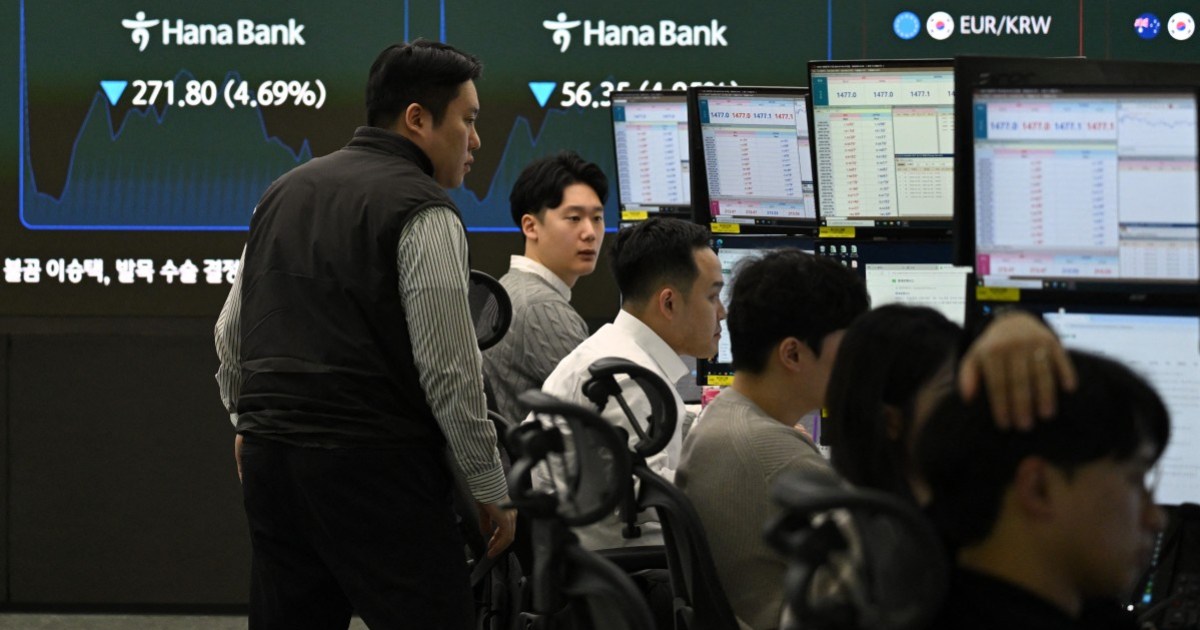
The financial world recently witnessed a startling event as South Korea’s benchmark stock index, the Kospi, experienced one of its most severe single-day declines in recent memory. Investors watched in dismay as the market shed a staggering 12%, triggering circuit breakers and sending shockwaves across Asia and beyond. This dramatic South Korea stocks crash was a complex interplay of factors: geopolitical tensions driving up oil prices, a unique concentration of tech giants, and emerging concerns around the booming artificial intelligence sector.
Understanding the forces behind this sudden downturn is crucial for investors and market watchers alike. While profit-taking after an impressive rally played a role, deeper systemic vulnerabilities and external pressures combined to create a perfect storm. Let's delve into the specific catalysts that led to this significant market correction and what it means for the future of South Korea's economy and global markets.
The Historic Plunge: Unpacking the Numbers
The scale of the recent sell-off on the Korean Exchange was truly unprecedented. The benchmark Kospi index plummeted by 12.1% to close at 5,093.54, extending losses from the preceding session and marking its worst single-day performance on record. This sharp decline immediately triggered temporary trading halts – a "circuit breaker" mechanism designed to prevent spiraling panic selling. Similarly, the tech-heavy Kosdaq index, often seen as a barometer for smaller, growth-oriented tech companies, also triggered its own circuit breaker, ending the day down an even steeper 14% at 978.44.
At the heart of this market rout were the nation’s heavyweight technology stocks. Samsung Electronics, a global leader in semiconductors and consumer electronics, saw its shares tumble by nearly 12%. Close behind, chip rival SK Hynix experienced a significant drop of approximately 10%. Given their immense market capitalization and influence, these two giants alone were sufficient to drag the broader market dramatically lower, highlighting a structural vulnerability we will explore further.
This widespread selling followed a period of remarkable growth. In the preceding year, the Kospi had surged by more than 75%, primarily fueled by an insatiable global demand for semiconductors and the burgeoning AI industry. This momentum had even carried into the new year, pushing the index to fresh highs, with investor enthusiasm for memory chips — essential components for the rapidly expanding AI data centers — driving robust gains for tech titans like Samsung and SK Hynix. The question now is, was this crash an inevitable correction, or a sign of deeper trouble?
The Double-Edged Sword of Tech Concentration
While the explosive growth of South Korea’s tech sector has undeniably propelled its economy and stock market to dizzying heights, it also presents a significant Achilles' heel: extreme market concentration. This unique structural characteristic emerged as a primary amplifier during the recent market correction. Experts like Lorraine Tan, Asia director of equity research at Morningstar, have pointed out that "The drop in the KOSPI can largely be explained by the heavy concentration of individual stocks in the index."
Consider the staggering fact: Samsung Electronics and SK Hynix, two semiconductor behemoths, together account for nearly 50% of the entire Kospi index. While their innovation and global dominance are commendable, such a heavy weighting means that the performance of these few companies disproportionately influences the entire market. When they thrive, the Kospi soars. But when they stumble, as they did during this recent stocks crash south korea, the ripple effect is immediate and devastating for the broader index.
AI's Boom and Potential Bust
The narrative of the tech-led rally was largely built on the promise of Artificial Intelligence. Global demand for memory chips, particularly those used in AI data centers, created an unprecedented boom for companies like Samsung and SK Hynix. This surge fueled investor optimism, pushing stock prices to unsustainable levels in some cases. However, the very sector that drove the rally is now raising eyebrows.
Concerns are growing that the rapid expansion of AI data centers might face significant hurdles, potentially leading to a slowdown. The most prominent concern revolves around energy consumption. AI facilities are notoriously power-hungry, requiring substantially more electricity than traditional data centers. This escalating demand for energy, coupled with an already strained global energy supply chain and rising costs, could cap the growth trajectory of AI infrastructure. Should these expansion plans indeed slow down, the demand for high-end memory chips would inevitably soften, directly impacting the profitability and stock valuations of South Korea’s tech giants.
Furthermore, this concentration meant that what began as profit-taking after a massive rally quickly morphed into a broader "risk-off" sentiment across global markets. Investors, having enjoyed substantial gains, began to de-risk their portfolios, particularly from highly concentrated and previously high-flying sectors. This combination of profit realization and growing apprehension about the sustainability of the AI boom created a powerful downward pressure on South Korean tech stocks, and by extension, the entire Kospi.
Geopolitical Tensions & Oil Price Shocks
Beyond the internal dynamics of its tech sector, South Korea’s market also grapples with significant external vulnerabilities, particularly its reliance on imported energy. Rising oil prices, largely tied to escalating conflicts and instability in the Middle East, have historically proven to be a major drag on the Kospi, and this recent downturn was no exception.
According to Daniel Yoo, a global market strategist at Yuanta Securities, South Korea’s stock market possesses an inherent sensitivity to crude oil price swings. This makes geopolitical tensions, especially those impacting oil supplies, a potent driver of short-term market volatility. Why is this sensitivity so pronounced?
South Korea stands as a major importer of oil, possessing limited domestic energy resources. Its economy is heavily geared towards manufacturing and exports, sectors that are acutely sensitive to energy costs. When crude prices spike, the operational costs for industrial companies soar, eroding profit margins. Export-focused businesses face a double whammy: higher input costs and potentially reduced global demand if other economies are also struggling with inflated energy prices. This directly translates into reduced corporate earnings and, consequently, lower stock valuations across a broad spectrum of industries.
Data reinforces this vulnerability: Nomura reports that South Korea's net oil imports represent approximately 2.7% of its Gross Domestic Product (GDP). This substantial dependency makes the country particularly susceptible to external energy shocks. A sudden rise in oil prices effectively acts as a tax on the entire economy, dampening consumer spending, industrial output, and overall economic growth.
Therefore, while the tech sell-off captured headlines, the underlying pressure from the global energy market cannot be overstated. Investors, already wary of the concentrated tech sector, became even more risk-averse in the face of escalating geopolitical risks and their direct economic implications for South Korea.
Navigating Volatility: Insights for Investors
For many investors, witnessing a market plunge like the recent stocks crash south korea can be unsettling. However, it's crucial to distinguish between a market correction and a fundamental shift in long-term economic prospects. Daniel Yoo of Yuanta Securities suggests that the recent plunge should likely be viewed as a market correction after an extended rally, rather than a fundamental change in the long-term outlook for South Korea. This perspective offers a glimmer of hope amidst the current turbulence.
Understanding Market Corrections
Market corrections, typically a 10% or more decline from a recent peak, are a normal, albeit uncomfortable, part of market cycles, often serving to "reset" valuations after periods of rapid growth. For South Korea, where the Kospi had surged over 75% in the preceding period, some level of pullback was arguably inevitable. The question then becomes what specific actions can investors take?
Key Considerations for Investors:
- Diversification: The Kospi's heavy concentration in tech highlights the paramount importance of diversification. Investors overly exposed to a single sector or a handful of companies can face amplified risks during downturns. Spreading investments across different sectors, asset classes, and geographies can help mitigate such concentrated risks.
- Long-Term Perspective: Panic selling during a crash often leads to missed opportunities when the market eventually recovers. A long-term investment horizon allows investors to weather short-term volatility and benefit from the eventual rebound of fundamentally sound economies and companies.
- Monitor Key Indicators: For South Korea, particular attention should be paid to global oil prices and the stability of the Middle East. As Yoo noted, "If oil prices stabilize, the market could regain its footing." Beyond oil, tracking global demand for semiconductors, developments in AI infrastructure, and government policies aimed at diversifying the economy will provide critical insights.
- Evaluate Fundamentals: While market sentiment can drive short-term swings, the long-term performance of companies is rooted in their underlying fundamentals. Are Samsung and SK Hynix still innovative leaders? Is their market share strong? A deep dive into company reports can reveal whether a dip presents a buying opportunity for quality assets.
- Risk Management: Establishing a clear risk tolerance and sticking to an investment plan can prevent emotional decisions during volatile periods. Tools like stop-loss orders or hedging strategies can also be considered, though they come with their own complexities.
Ultimately, the recent crash serves as a powerful reminder that even robust markets are subject to both internal vulnerabilities and external shocks. While the immediate pain was significant, understanding its multifaceted causes can empower investors to make more informed decisions moving forward.
Conclusion
The recent dramatic tumble of South Korea's Kospi index, a 12% plunge that shocked global markets, serves as a potent case study in the complex interplay of economic forces. It was not a singular event but rather the convergence of several powerful factors: the inherent vulnerability of an index heavily concentrated in a few dominant tech companies, particularly semiconductor giants like Samsung Electronics and SK Hynix; emerging concerns about the sustainability and energy demands of the booming artificial intelligence sector; and the ever-present shadow of geopolitical instability, which sends crude oil prices soaring and disproportionately impacts South Korea’s manufacturing-driven, import-reliant economy. While the immediate impact of this historic sell-off was severe, leading to temporary trading halts and widespread investor anxiety, many analysts view it as a significant market correction rather than a fundamental reversal of South Korea's long-term economic trajectory. As global markets continue to navigate an unpredictable landscape, the lessons from the Kospi's recent struggles underscore the critical importance of diversification, risk management, and a nuanced understanding of both internal market structures and external macroeconomic pressures for all investors.