The Market Tremor: Understanding South Korea's Recent Correction
The financial world watched with bated breath as South Korea's benchmark Kospi index experienced a dramatic and historic plunge, sending shockwaves through global markets. This sudden downturn, often characterized as a South Korea stocks crash, wasn't merely a blip; it was a significant market correction that saw billions wiped off valuations and investor confidence tested. But what precisely triggered this seismic event in one of Asia's most dynamic economies? Beyond the initial headlines of panic, a confluence of interconnected factors – from a concentrated tech sector to geopolitical tensions and evolving AI dynamics – coalesced to create the perfect storm. This article delves deep into the underlying causes, offering insights into why South Korea's market became so vulnerable and what lessons can be drawn from its recent volatility.
The Shockwave: A Historic Plunge in South Korean Equities
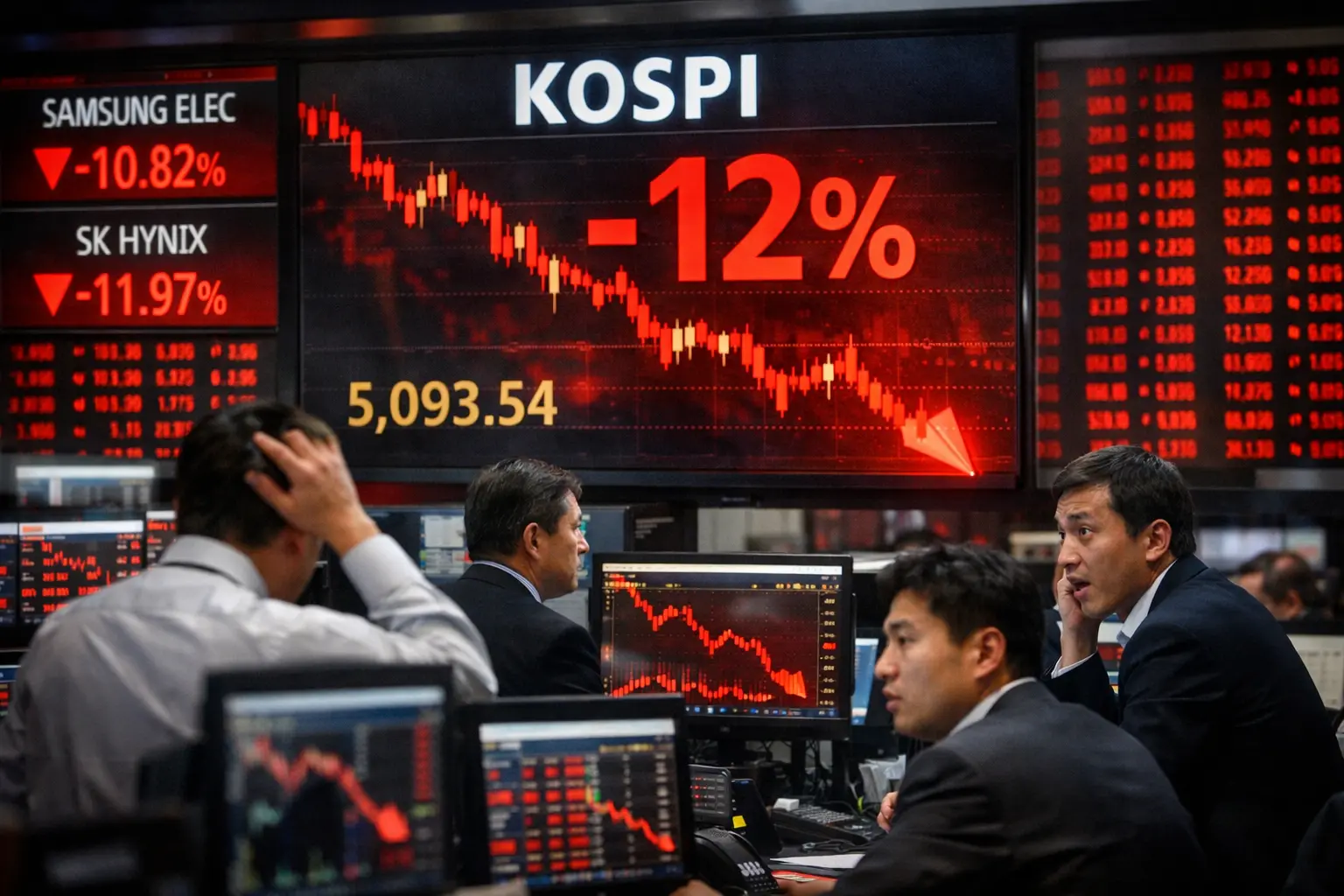
The scale of the sell-off was undeniably stark. The Kospi index tumbled a staggering 12.1% in a single day, registering its worst single-day decline on record and extending sharp losses from the previous session. This dramatic descent forced the Korea Exchange to temporarily halt trading, triggering circuit breakers designed to prevent freefall. The tech-heavy Kosdaq index mirrored this distress, also triggering a circuit breaker and ultimately closing down a formidable 14%.
At the heart of this rapid contraction were South Korea's heavyweight technology stocks. Industrial titans like Samsung Electronics saw their share prices drop by nearly 12%, while semiconductor giant SK Hynix fell approximately 10%. These significant declines in market leaders acted as a potent drag, pulling the broader market sharply lower and emphasizing the critical role these companies play in the nation's economic landscape. For a comprehensive overview of the event, you can revisit the details of the South Korea Stocks Crash: Kospi Plunges 12% in Historic Sell-Off.
What made this particular South Korea stocks crash so notable was the context in which it occurred. This dramatic sell-off followed an period of incredible rally for South Korean equities. The Kospi had surged more than 75% in the preceding year, primarily fueled by a booming semiconductor industry. This momentum had even continued into the new year, pushing the index to fresh highs, as robust global demand for memory chips – critical components for artificial intelligence data centers – drove strong gains for tech behemoths like Samsung and SK Hynix. The market's vulnerability, it seems, was amplified by its very successes.
Unpacking the Decline: Key Drivers Behind the Market Correction
To truly understand the recent South Korea market correction, we must look beyond the immediate panic and examine the structural and macroeconomic factors that converged to create such a volatile environment.
Heavy Reliance on Tech: A Double-Edged Sword
One of the most frequently cited reasons for the amplified market decline is the heavy concentration of a few individual stocks within the Kospi index. According to Morningstar data, Samsung Electronics and SK Hynix alone constitute nearly 50% of the Kospi. While their explosive growth fueled the previous rally, this concentrated exposure inherently carries significant risks. When these tech giants face headwinds, their sheer weight can disproportionately impact the entire index, turning what might be a sector-specific dip into a broader market downturn. This lack of diversification within the benchmark makes the Kospi particularly susceptible to sector-specific shocks, illustrating the inherent fragility of a market heavily dependent on a select few dominant players.
The AI Boom's Shifting Sands: Energy Concerns and Profit-Taking
The meteoric rise of the Kospi was largely attributed to the AI revolution and the burgeoning demand for high-performance memory chips. However, the very foundations of this boom are now prompting questions. Growing concerns about the rapid expansion of AI data centers, particularly their substantial energy requirements, are beginning to cast a shadow. AI facilities demand significantly more power than traditional data centers, raising eyebrows about sustainability, infrastructure limitations, and potentially escalating operational costs. This has led to speculation that the pace of AI data center expansion could slow down, directly impacting the demand projections for companies like Samsung and SK Hynix.
Furthermore, after such an "incredible rally" – with the Kospi surging over 75% – a period of profit-taking was almost inevitable. Many investors, having enjoyed substantial gains, opted to cash out, contributing to the sell-off. This localized profit-taking combined with a broader "risk-off" mood permeating global markets, fueled by various geopolitical tensions, created a powerful downward momentum. When investors globally become more risk-averse, emerging markets like South Korea often experience outflows as capital seeks safer havens.
Geopolitical Ripples: Oil Prices and Middle East Tensions
Another critical element weighing heavily on South Korean markets has been the persistent rise in oil prices, inextricably linked to escalating conflicts and instability in the Middle East. South Korea, a nation with a manufacturing-heavy economy, is also a major importer of oil. This makes its stock market exceptionally sensitive to fluctuations in crude prices, turning geopolitical tensions into a major driver of short-term volatility.
When crude prices spike, industrial companies and export-focused businesses in South Korea face immediate pressure. Higher energy costs translate directly into increased input costs for manufacturers, potentially eroding profit margins and making their exports less competitive on the global stage. According to Nomura, South Korea's net oil imports equate to approximately 2.7% of its GDP, underscoring the country's particular vulnerability to external energy shocks. For a deeper dive into how these factors combined, explore Why South Korea's Kospi Tumbled: Oil, AI & Tech Concentration.
Navigating Volatility: Insights for Investors
While the recent South Korea stocks crash was certainly dramatic, many experts view it as a market correction after an extended rally, rather than a fundamental shift in the long-term economic outlook. Understanding this distinction is crucial for investors.
- Correction vs. Bear Market: A correction is typically defined as a decline of 10-20% from a recent peak, often a healthy reset after rapid gains. A bear market, conversely, implies a more prolonged and deeper decline (over 20%) rooted in more fundamental economic weaknesses. The current situation, while severe, largely fits the definition of a correction.
- Long-Term Perspective: For those invested in South Korean equities, maintaining a long-term perspective is key. Market corrections are a natural part of the investment cycle. South Korea's leading tech companies, despite short-term dips, often possess strong underlying fundamentals, robust innovation pipelines, and significant global market share.
- Diversification is Prudent: The recent events underscore the inherent risks of concentrated portfolios. Investors should consider broader diversification beyond a few dominant tech giants, exploring other promising sectors within the South Korean economy or globally to mitigate future sector-specific shocks.
- Monitor Key Indicators: Keep a close eye on global oil prices, as their stabilization could significantly alleviate pressure on South Korea's import-dependent economy. Also, monitor developments in the AI sector regarding energy efficiency and data center expansion plans, as these will directly impact the growth trajectory of chipmakers.
- Look for Stabilization Signs: A potential regaining of market footing could be signaled by stabilizing oil prices, easing geopolitical tensions, and renewed confidence in the long-term growth prospects of the AI and semiconductor industries.
Conclusion
The recent stocks crash south korea witnessed in the historic Kospi plunge was a complex event, born from a potent cocktail of factors. The market's heavy reliance on a few tech giants, evolving concerns within the booming AI sector, and the ripple effects of global geopolitical tensions driving up oil prices all played critical roles. While the immediate aftermath was undoubtedly turbulent, many analysts concur that this event primarily represents a sharp market correction following an impressive rally, rather than a harbinger of long-term economic collapse. As South Korea's dynamic economy navigates these headwinds, the path to regaining its footing will likely depend on the stabilization of global commodity markets, continued innovation in its core tech industries, and a careful balance of global economic and political forces.